


Holi in India 2026 will be celebrated on March 2 (Holika Dahan) and March 3 or 4 (Rangwali Holi) depending on regional calendars. Across the country, this vibrant spring festival unfolds in dramatically different ways—ranging from deeply spiritual temple rituals and centuries-old royal traditions to high-energy music festivals that attract global travelers**.
Rooted in the legends of Lord Krishna and Radha, Holi marks the triumph of good over evil and the arrival of spring. Over centuries, each region has infused the festival with unique customs, creating some of the most attractive tourist destinations during Holi in India.
Within India, every state, every city, and even every village celebrates Holi according to its own customs, climate, history, and social fabric.
- In temple towns, Holi is devotional.
- In royal cities, it is ceremonial.
- In metropolitan hubs, it becomes cosmopolitan.
- In remote valleys, it reflects agrarian and seasonal traditions.
This extraordinary diversity makes Holi in India one of the most culturally layered festivals in the world.
Traditional and Spiritual Hubs: The Sacred Heart of Holi
Mathura and Vrindavan (Uttar Pradesh)

The twin towns of Mathura and Vrindavan are revered as the birthplace and playground of Lord Krishna. Holi has been celebrated here for over 5,000 years, according to local belief.
At the iconic Banke Bihari Temple, the famous Phoolon Wali Holi transforms devotion into poetry, as priests shower devotees with fresh flower petals instead of colors. Celebrations begin nearly a week in advance, culminating in temple processions, devotional singing, and ritualistic color play.
Foreign tourists flock here for the authentic spiritual immersion, where sacred chants echo through narrow lanes and the air is filled with gulal. The experience is intense, emotional, and profoundly symbolic.
Barsana and Nandgaon (Uttar Pradesh)

In Barsana and Nandgaon, Holi becomes legendary through Lathmar Holi, a tradition believed to be centuries old. Women symbolically chase men with sticks (lathis), reenacting playful episodes from Krishna’s youth.
The spectacle draws thousands of domestic and international visitors each year. The ritual, though theatrical, is steeped in folklore and Krishna devotion, making it one of the most photographed Holi traditions in the world.
Varanasi (Uttar Pradesh)

The ancient city of Varanasi offers perhaps the most intense spiritual dimension of Holi. At Manikarnika Ghat, Masan Ki Holi unfolds in a rare ritual where participants use ashes instead of colors, symbolizing the cycle of life and death.
With a history stretching back over 3,000 years, Varanasi’s Holi reflects its identity as a city of liberation (moksha). Foreign travelers seeking deeper philosophical experiences find this destination compelling and transformative.
Royal and Heritage Celebrations: Regal Holi in Rajasthan
Udaipur

In Udaipur, Holi takes on royal grandeur. The Mewar royal family leads a majestic Holika Dahan ceremony at the City Palace. The procession features decorated horses, traditional drummers, and ceremonial guards.
This tradition dates back several centuries, reflecting Rajasthan’s warrior heritage. The elegance and structure of Udaipur’s celebration attract luxury travelers and foreign tourists seeking a regal and culturally rich Holi experience.
Jaipur

The Pink City, Jaipur, blends heritage with festivity. Palace courtyards host folk dances such as Ghoomar, traditional music performances, and curated Holi events.
Although the city-wide Elephant Festival was discontinued for ethical reasons, private heritage properties now organize sophisticated “Eleholi” celebrations. Jaipur appeals strongly to international tourists who desire a controlled yet authentic cultural environment.
Jodhpur

Known as the Blue City, Jodhpur offers rooftop Holi parties with panoramic views of the Mehrangarh Fort skyline. The festival here carries a distinct Rajasthani character, with vibrant turbans, folk rhythms, and community gatherings dating back to medieval times.
High-Energy and Party Hubs: Holi for the Global Crowd
Pushkar (Rajasthan)

Pushkar has become synonymous with high-energy Holi celebrations. The town’s central square erupts into massive street parties featuring DJs, live music, and color explosions.
Over the last two decades, Pushkar has gained global fame, drawing backpackers and international festival-goers. The fusion of traditional color play with electronic music makes it one of the most popular Holi destinations for foreign tourists.
Goa

In Goa, Holi merges with the local spring festival Shigmo, featuring mythological parades, traditional drumming, and beachside music events.
Goa’s Holi has evolved over centuries, influenced by both Hindu and Portuguese heritage. The coastal vibe and nightlife scene make it a magnet for international travelers seeking a tropical festival atmosphere.
Delhi

India’s capital, Delhi, offers a diverse spectrum—from luxury Holi brunches with international DJs to traditional street celebrations in Old Delhi. As a metropolitan hub, Delhi attracts expatriates and global visitors looking for variety and scale.
Shantiniketan (West Bengal)

In Shantiniketan, Holi is celebrated as Basanta Utsav, introduced by Rabindranath Tagore at Visva-Bharati University in the early 20th century.
Students dress in yellow, perform classical dances to Rabindra Sangeet, and gently apply abir. The refined atmosphere appeals to cultural travelers and art enthusiasts.
Anandpur Sahib (Punjab)

Anandpur Sahib hosts Hola Mohalla, a three-day Sikh festival established in 1701 by Guru Gobind Singh. Nihang warriors demonstrate martial arts (Gatka), horse riding, and weapon mastery.
This powerful display of faith and valor attracts both domestic pilgrims and international observers interested in Sikh heritage.
Hampi (Karnataka)
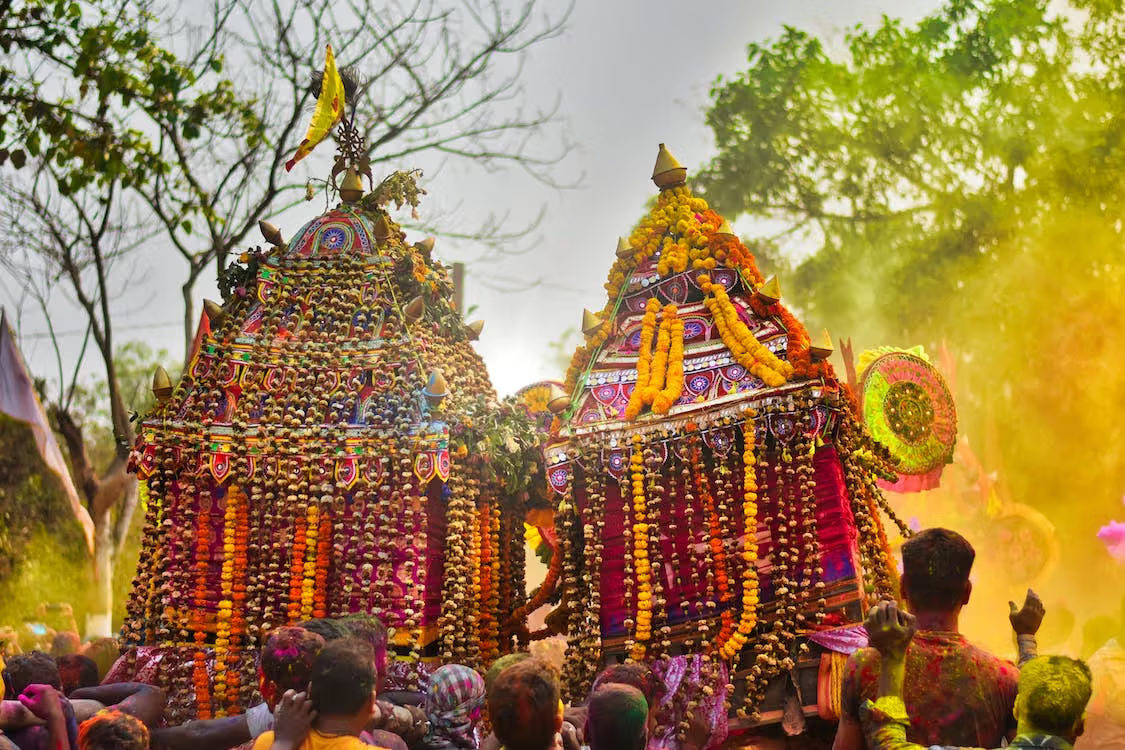
The UNESCO World Heritage ruins of Hampi provide a surreal backdrop for Holi in South India. After vibrant color play among ancient temples, participants take a communal dip in the Tungabhadra River.
Hampi’s blend of history and festivity attracts backpackers and culture-driven foreign tourists.
Sangla Valley (Himachal Pradesh)

In Sangla Valley, Holi merges with the Faguli Festival. Snow, masked Phagli dances, and local dishes like Totu create a rare Himalayan celebration far removed from mainstream tourism.
Why Holi in India 2026 Attracts Global Travelers
From the spiritual intensity of Mathura and Varanasi to the royal elegance of Udaipur, the electrifying energy of Pushkar and Goa, and the cultural refinement of Shantiniketan, Holi in India presents unmatched diversity.
International visitors are particularly drawn to:
- Mathura & Vrindavan for authentic Krishna devotion
- Pushkar & Goa for party atmospheres
- Jaipur & Udaipur for heritage luxury
- Varanasi for spiritual depth
Holi in India is not a single celebration—it is a mosaic of traditions spanning thousands of years, unified by color, devotion, and joy.
Conclusion: Experience the Many Faces of Holi in India
Holi in India 2026 promises a spectrum of experiences—sacred rituals, royal ceremonies, cultural artistry, and high-energy global festivals. Whether one seeks spiritual awakening, heritage immersion, or vibrant nightlife, India offers a Holi destination perfectly suited to every traveler’s desire.
About The Author
Discover more from Jist Feed
Subscribe to get the latest posts sent to your email.


