

Company Background and Evolution
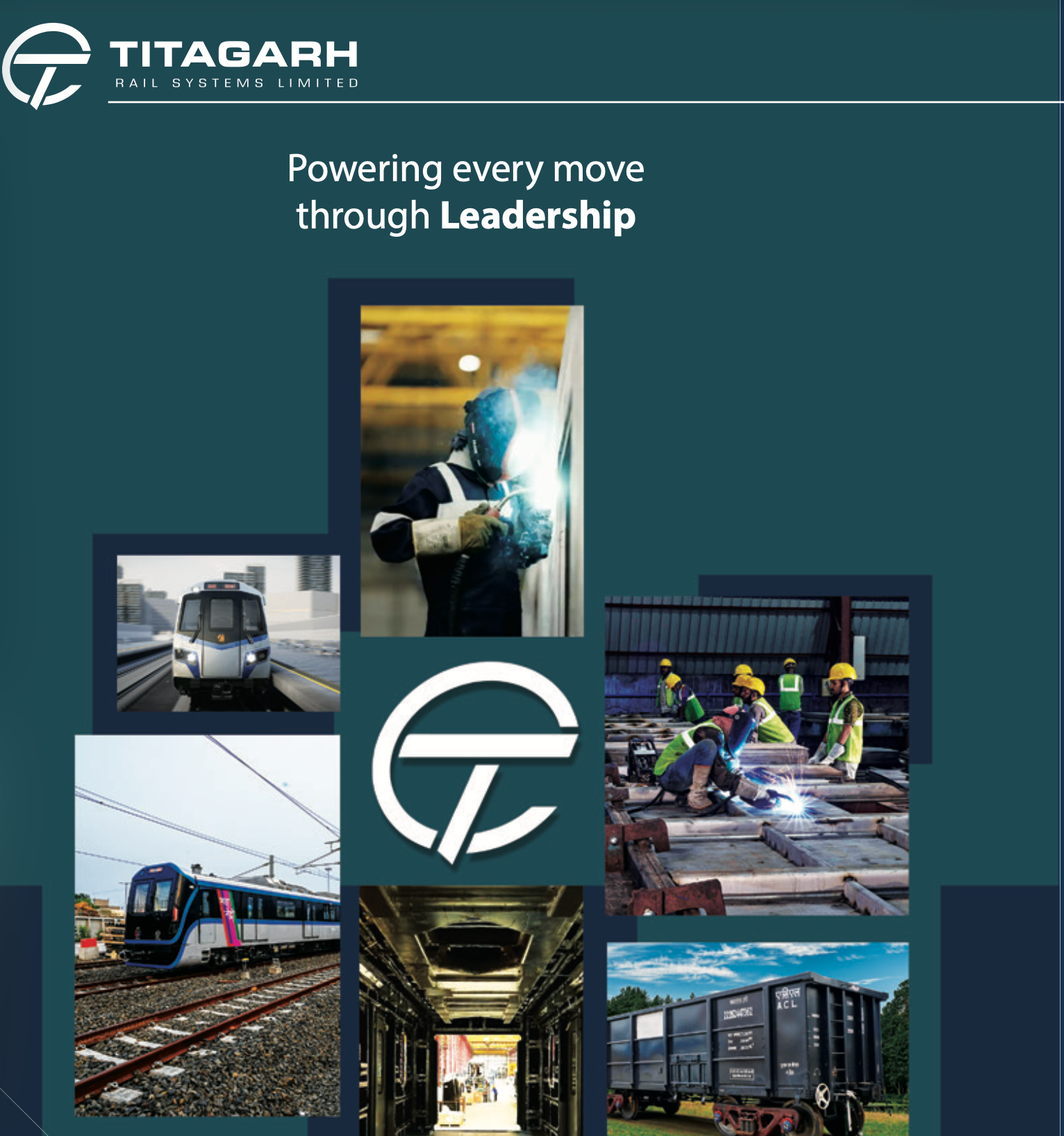
Titagarh Rail Systems, earlier known primarily through its wagon manufacturing business (often referred to by investors as Titagarh Wagons), has undergone a remarkable transformation over the past decade. What started as a freight wagon-focused company has steadily evolved into a diversified rail solutions provider with exposure to freight, passenger rail, metro coaches, and specialised rail equipment.
This evolution has not been accidental. Management has consistently signalled its intent to move up the value chain, reduce dependence on cyclical freight wagon orders, and build capabilities in technologically complex segments like metros and passenger coaches. Strategic acquisitions, technology tie-ups, and capacity expansions have all played a role in this journey.
Strategic Shift Towards Passenger Rail and Metro Systems
Passenger rail and metro systems offer longer-term visibility, higher value addition, and deeper integration across multiple subsystems. Unlike wagons, which are often standardised and price-competitive, metro coaches and systems demand customisation, engineering depth, and lifecycle support. By focusing on this segment, Titagarh is positioning itself for more stable and potentially higher-margin growth.
The ABB partnership fits neatly into this broader strategy. Instead of remaining dependent on third-party suppliers for critical propulsion technology, Titagarh is now embedding this capability within its own ecosystem.
Titagarh Rail Systems Expansion Plan: What Management Is Building for the Next Decade
Titagarh Rail Systems has clearly moved beyond being viewed as only a freight wagon manufacturer. As highlighted in the latest annual disclosures and reinforced during the earnings and annual meeting discussions, management has laid out a multi-year expansion roadmap that spans passenger rail, metro coaches, propulsion systems, and even specialized shipbuilding.
Passenger Rail & Metro Coach Expansion
The most visible pillar of expansion is passenger rail manufacturing. Management confirmed that the order pipeline for metro coaches is visible till FY28, supported by projects such as Mumbai Metro Line 5 and Line 6, Gujarat Metro, Bangalore Metro, and legacy orders like Pune Metro. The company expects a sharp ramp-up in deliveries:
- FY26 target: 100–120 metro cars
- This represents an 8–10x jump over previous years, with volumes expected to almost double again in FY27
To support this growth, Titagarh has:
- Installed full aluminium coach manufacturing capability at its Uttarpara facility
- Moved away from importing flat packs, enabling 100% indigenous coach body production from FY27 onwards
- Invested heavily in backward integration to reduce supply-chain dependency
This transition materially strengthens margins, execution control, and long-term competitiveness.
Propulsion Systems & Technology-Led Expansion
Another key expansion lever is the Propulsion Systems SBU, strengthened further by the strategic collaboration with ABB India. Management clarified that this vertical is not opportunistic but structural, designed to embed Titagarh deeper into the metro value chain.
At the core of the agreement is the supply of advanced propulsion systems for 25kV metro projects across India. These systems are designed for high-capacity, high-speed metro operations and are typically used in longer corridors and suburban-style metro networks.
ABB India brings decades of global experience in traction technology, while Titagarh contributes its local manufacturing base, project execution capabilities, and deep understanding of the Indian rail ecosystem. Together, they aim to deliver propulsion systems that meet international standards while being tailored to Indian operating conditions.
Key highlights:
- Entry into 25kV propulsion systems alongside existing 750V capabilities
- Phased technology transfer allowing local co-production
- Integration with in-house TCMS (Train Control & Monitoring Systems) developed at the Bangalore design centre
This effectively positions Titagarh as a systems integrator, not just a coach supplier—an important upgrade in business quality.
Freight Wagon Capacity Stabilisation & De-risking
While expansion narratives focus on passenger rail, freight wagons remain a cash-generating backbone.
Management confirmed:
- Wagon production normalized to 800–850 wagons per month
- Installed capacity remains 1,000 wagons per month
- The long-standing wheel-set bottleneck will be structurally resolved once the Ramakrishna Forgings JV wheel plant in Chennai becomes operational by Q1 next year
This is crucial, as wheel availability has historically been a sector-wide risk. Its resolution improves predictability and reduces execution volatility.
Shipbuilding: A Quiet but Strategic Expansion
An underappreciated part of Titagarh’s expansion is specialized shipbuilding.
Management disclosed:
- Over 35 vessels delivered to Indian Navy, Coast Guard, NIOT, and GRSE
- New shipyard at Falta, West Bengal, with jetty access
- Capacity to manufacture 16–18 specialized vessels per year
- Focus on 100–160 meter vessels, not commoditized bulk ships
This diversification aligns with the government’s Atmanirbhar Bharat push and provides optional upside without overstretching capital.
Fundamental Strength of Titagarh Rail Systems
1. Strong Order Book Visibility
The company has confirmed multi-year visibility across:
- Metro coaches
- Passenger trains (including Vande Bharat Sleeper)
- Freight wagons
This significantly reduces earnings uncertainty compared to pure-play wagon manufacturers.
2. Diversified Revenue Mix
Titagarh now operates across:
- Freight wagons
- Metro & passenger rail
- Propulsion & rail systems
- Specialized shipbuilding
This diversification smoothens cyclicality and improves resilience.
3. Deepening Value Chain Integration
Backward integration (coach bodies, systems, TCMS) enhances:
- Margin sustainability
- Execution speed
- Bargaining power in tenders
Management clearly emphasized that by the end of the current financial year, nearly all critical coach body processes will be in-house
4. Management Credibility & Execution Track Record
The leadership team has:
- Delivered complex metro projects since 2021
- Successfully navigated supply-chain disruptions
- Shown willingness to invest ahead of demand
This builds confidence in stated expansion plans.

Are There Any Red Flags? A Balanced View
While the fundamentals are strong, investors should remain aware of key risks:
1. Execution Risk in Rapid Scale-Up
The passenger rail ramp-up is steep. Any delays in:
- Vendor approvals
- Testing and certification
- Skilled manpower availability
could temporarily impact margins or timelines.
2. Working Capital Intensity
Metro and shipbuilding projects typically involve:
- High upfront working capital
- Milestone-based payments
While management acknowledged this, sustained growth will require tight cash-flow discipline.
3. Dependence on Government Spending
A large portion of revenue is linked to:
- Metro corporations
- Indian Railways
- Defence & PSU shipbuilding
Any slowdown in public capex could affect order inflows.
Importantly, no accounting red flags or governance concerns were highlighted in management commentary or disclosures.
Investor Sentiment: How the Market Is Reading Titagarh
Based on management commentary and recent strategic moves:
- Long-term investors view Titagarh as a rail manufacturing transformation story
- Institutional interest is supported by clearer SBU-level roadmaps and execution visibility
- The ABB propulsion tie-up and aluminium coach localization are seen as structural positives, not one-off news items
The stock sentiment remains constructive, though valuations tend to react sharply to quarterly execution performance.
Technology Transfer Under Make in India: A Game Changer
Phased Technology Transfer Explained
One of the most important aspects of this deal is the phased transfer of technology. Instead of a simple buyer-seller relationship, ABB will gradually transfer know-how, processes, and manufacturing expertise to Titagarh. This allows co-production to begin and eventually scale within India.
Such phased transfers reduce execution risk while ensuring that quality and safety standards are maintained. Over time, Titagarh’s teams gain hands-on experience, enabling true localisation rather than superficial assembly.
Impact on India’s Rail Manufacturing Ecosystem
Reducing Import Dependence
Localising propulsion technology reduces reliance on imports for both initial supply and long-term spares. This has strategic implications, especially for critical urban infrastructure.
Boosting Local Suppliers and Skill Development
As co-production scales up, ancillary suppliers, engineers, and technicians benefit. Over time, this creates a virtuous cycle of capability building across the ecosystem.
This article is written for informational purposes only and is not investment advice.
About The Author
Discover more from Jist Feed
Subscribe to get the latest posts sent to your email.