

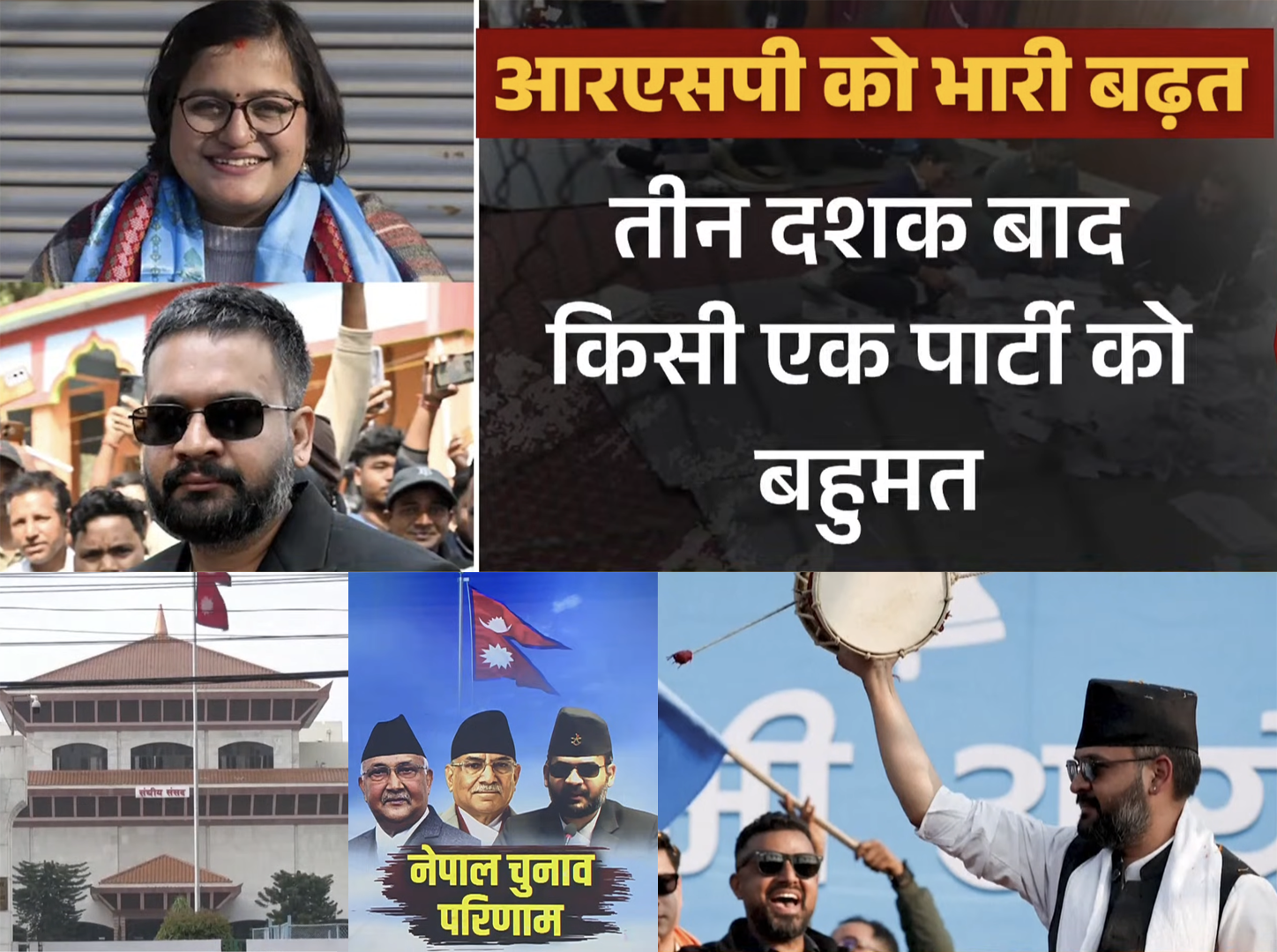
Who is Balen Shah?
Balendra Shah, widely known as Balen Shah, is a Nepalese politician, structural engineer, and former rapper who has rapidly emerged as one of the most influential young leaders in Nepal.
At just 35 years old, Shah has become a prominent face of political change, challenging the traditional political establishment in Nepal. After the 2026 general elections, he has emerged as a strong contender for the Prime Minister’s position representing the Rastriya Swatantra Party (RSP).
Political Rise and 2026 Elections
Balen Shah entered national politics after serving as the 15th Mayor of Kathmandu from 2022 to 2026.
In the 2026 elections, he contested from the Jhapa-5 constituency, where he faced former Nepal Prime Minister KP Sharma Oli. Early vote counts suggested a strong performance by Shah and his party.
The rapid rise of the Rastriya Swatantra Party has disrupted Nepal’s traditional political structure dominated for decades by older parties.
Education and Early Career
Before entering politics, Balen Shah built a career in engineering and music.
He earned his Master’s degree in structural engineering from Visvesvaraya Technological University in Karnataka, India.
At the same time, he gained popularity in Nepal’s hip-hop scene as a rapper known for songs criticizing corruption, social injustice, and political failures.
This background helped him connect strongly with young voters and urban youth.
Mayor of Kathmandu: Key Actions
Balen Shah gained national attention after winning the Kathmandu mayoral election in 2022 as an independent candidate.
During his tenure as mayor, he focused on several urban reforms:
- Demolition of illegal constructions
- Crackdowns on unauthorized structures
- Improvements in waste management
- Urban infrastructure reforms
While supporters praised his decisive governance style, critics argued that some actions were controversial or implemented too aggressively.
Controversies and Nationalist Positions
Balen Shah’s political career has also included several controversies.
Greater Nepal Map
He displayed a “Greater Nepal” map in his office, referencing historical territories that are now part of India.
Indian Film Ban
In 2023, he attempted to ban the screening of the Indian film Adipurush in Kathmandu after a dialogue referred to Sita as “India’s daughter.” The decision sparked legal and diplomatic debate before the ban was lifted.
Social Media Statements
Shah is known for blunt social media posts, some of which have criticized foreign powers and stirred controversy.
Is Balen Shah Pro-India?
Balen Shah’s position toward India is generally seen as nationalist rather than clearly pro-India or anti-India.
On one hand:
- He studied in India for several years.
- His focus on infrastructure development could encourage economic cooperation with India.
On the other hand, he has also called for renegotiating the historic 1950 India–Nepal Treaty of Peace and Friendshipand has criticized foreign influence in Nepal’s internal politics.
His foreign policy approach is often described as “Nepal First.”
What is the Rastriya Swatantra Party?
The Rastriya Swatantra Party was founded in 2022 by journalist-turned-politician Rabi Lamichhane.
The party quickly gained popularity by positioning itself as a clean and reform-oriented alternative to Nepal’s traditional political parties.
Unlike many older parties, RSP promotes:
- Merit-based leadership
- Citizen participation
- Anti-corruption governance
Key Agenda of the Rastriya Swatantra Party
The party’s election manifesto, titled “100 Policy Foundations for Transformation,” outlines several major reforms.
1. Anti-Corruption
- Independent anti-corruption body
- Investigation of public officials’ assets since 1990
- Digital governance reforms
2. Economic Growth
- Increase Nepal’s per capita income to $3,000
- Build a $100 billion economy within 5–7 years
- Create over 1 million jobs to reduce youth migration
3. Infrastructure Development
- Expand hydropower production to 15,000 MW
- Build 30,000 km of highways
4. Democratic Reforms
- Introduce Right to Recall for elected representatives
- Implement Right to Reject (NOTA) in elections
- Allow online voting for Nepali citizens living abroad
5. Social Justice
- Formal state apology for historical discrimination against Dalit communities.
Religious Position
The Rastriya Swatantra Party supports Nepal’s secular democratic system.
Rather than promoting a Hindu state, the party focuses on:
- Respecting Nepal’s Sanatan cultural heritage
- Protecting religious diversity
- Prioritizing governance and economic reform
This position differs from the monarchist Rastriya Prajatantra Party, which advocates restoring Nepal as a Hindu monarchy.
Conclusion
In many ways, the rise of Balendra Shah reflects a deeper shift within Nepal’s society. A generation grew up amid political instability. They faced economic uncertainty. This generation is now demanding a different kind of leadership. They want transparency, efficiency, and national confidence. Riding that wave of public frustration and youthful optimism, Shah and the Rastriya Swatantra Party have managed to capture the imagination of many voters across the country.
Yet the real test is only beginning. Campaign promises and political momentum must now confront the realities of governance, coalition politics, and the complex regional dynamics that shape Nepal’s future. Whether Balen Shah ultimately becomes a transformative leader or simply another chapter in Nepal’s turbulent political story will depend not only on electoral success, but on his ability to deliver the reforms that voters are now hoping for.
About The Author
Discover more from Jist Feed
Subscribe to get the latest posts sent to your email.