

India is set to assume the Chairship of BRICS for the fourth time in 2026, marking another milestone in its growing leadership role across the Global South. With successful chairships in 2012, 2016, and 2021, India’s upcoming tenure carries both experience and renewed ambition. Notably, 2026 will host the 18th BRICS Summit since the grouping’s inception in 2009, a moment that arrives at a time of profound global economic, geopolitical, and technological transformation.
On 13 January 2026, External Affairs Minister Dr. S. Jaishankar officially unveiled the logo, theme, and website of India’s BRICS Chairship in New Delhi, setting the tone for a year focused on cooperation, inclusivity, and sustainable development.
India’s BRICS 2026 Logo: Tradition Meets Modernity
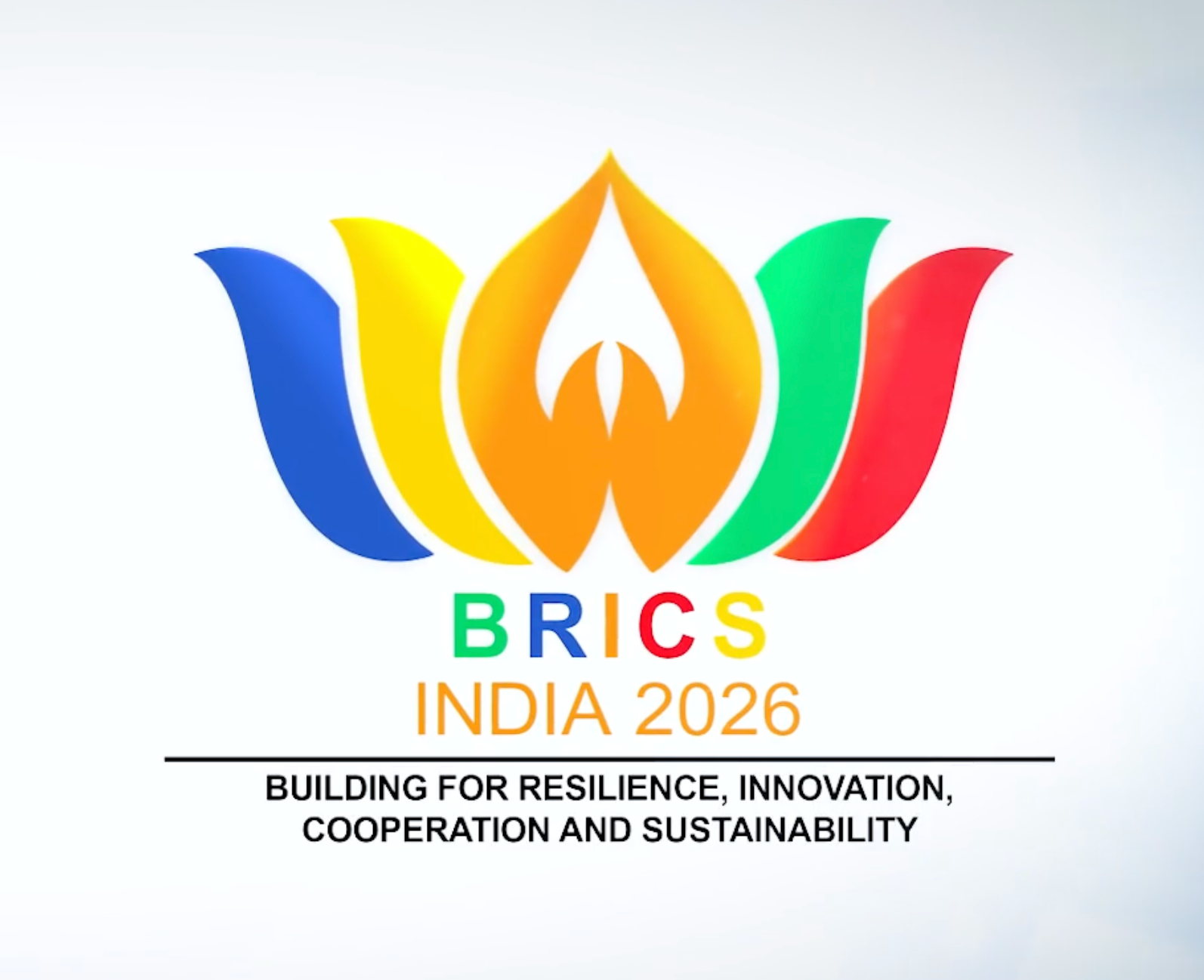
The BRICS 2026 logo is a thoughtful visual representation of India’s civilizational ethos and its modern global outlook. At the heart of the design is the lotus, a powerful symbol in Indian culture that stands for purity, resilience, hope, and progress, even in challenging conditions.
What makes the logo particularly meaningful is how the petals radiate the vibrant colours of all BRICS member countries, symbolizing:
- Collective strength
- Unity in diversity
- Shared growth and mutual respect
At the center of the lotus lies the elegant “Namaste” gesture, capturing India’s timeless philosophy of warmth, respect, dialogue, and harmonious collaboration. It subtly conveys the message that India’s leadership style within BRICS is inclusive, respectful, and partnership-driven rather than dominance-oriented.
In many ways, the logo visually narrates India’s approach to multilateralism—rooted in tradition, yet forward-looking and globally connected.
Theme of India’s BRICS Chairship 2026
India’s BRICS Chairship is guided by the theme:
“Building for Resilience, Innovation, Cooperation and Sustainability”
This theme reflects a people-centric and humanity-first approach, as articulated by the Hon’ble Prime Minister during the 2025 Rio Summit. Each pillar of the theme responds directly to the challenges facing the world today:
- Resilience – Strengthening economies and societies against shocks such as pandemics, climate change, and financial instability.
- Innovation – Promoting technology-driven solutions, digital public infrastructure, and inclusive growth models.
- Cooperation – Reinforcing multilateralism and South-South collaboration in an increasingly fragmented world.
- Sustainability – Ensuring growth that is environmentally responsible and socially equitable.
Together, these pillars underline India’s vision of BRICS as not just an economic bloc, but a platform for shared human progress.
Why BRICS Is Important at This Moment
The relevance of BRICS has never been greater than it is today. The global order is undergoing a structural shift marked by:
- Slowing growth in traditional economies
- Rising debt in developing nations
- Geopolitical tensions and supply chain disruptions
- Climate emergencies and digital divides
In this context, BRICS serves as a critical voice for emerging and developing economies, advocating for a more balanced, inclusive, and representative global governance system.
Today, BRICS collectively accounts for:
- Over 40% of the world’s population
- Around one-quarter of global GDP (PPP basis)
- A growing share of global trade, energy resources, and innovation capacity
As global institutions face trust deficits and reform challenges, BRICS offers an alternative platform where developing nations can shape rules rather than just follow them.
BRICS Member Countries (As of 2026)
BRICS has expanded beyond its original five members, enhancing its global influence and economic weight.
Original Members:
- Brazil
- Russia
- India
- China
- South Africa
New Members (Admitted in recent expansion):
- Saudi Arabia
- United Arab Emirates
- Iran
- Egypt
- Ethiopia
This expanded BRICS represents a diverse mix of economies, cultures, and geopolitical regions, strengthening its ability to influence global decision-making, particularly on development finance, energy security, and global trade.
India’s Role and Vision as BRICS Chair 2026
India’s fourth BRICS Chairship comes with the advantage of institutional memory and proven leadership. Over the years, India has consistently positioned itself as a bridge-builder—between North and South, developed and developing economies, and competing global interests.
During its 2026 Chairship, India is expected to focus on:
- Reform of multilateral institutions like the IMF, World Bank, and UN
- Strengthening the New Development Bank (NDB)
- Promoting digital public infrastructure and fintech cooperation
- Enhancing people-to-people exchanges
- Encouraging sustainable development and climate action
India’s emphasis on “humanity-first” diplomacy ensures that economic growth remains aligned with social welfare and environmental responsibility.
Positive Impact and Effectiveness of BRICS So Far
Since its inception in 2009, BRICS has evolved from a conceptual grouping into a functional and influential multilateral platform.
Key Achievements of BRICS:
- New Development Bank (NDB):
Established to fund infrastructure and sustainable development projects, reducing dependency on traditional Western financial institutions. - Contingent Reserve Arrangement (CRA):
Provides financial stability and liquidity support during balance-of-payments crises. - Increased South-South Cooperation:
Enhanced collaboration in trade, technology, health, education, and culture. - Global Governance Reform Advocacy:
A unified voice calling for fair representation of developing nations in global institutions. - Economic Resilience:
BRICS economies have demonstrated strong recovery potential during global downturns.
For India, BRICS has been a strategic platform to amplify its global voice, promote development-centric policies, and advance its vision of a multipolar world.
What Makes India’s 2026 Chairship Unique
India’s BRICS Chairship in 2026 stands out for several reasons:
- It comes after India’s successful G20 Presidency, reinforcing its credibility as a global agenda-setter.
- It aligns with India’s push for Global South leadership.
- It integrates civilizational values with modern governance solutions.
- It emphasizes inclusivity, sustainability, and technology-driven growth.
By blending tradition (symbolized through the lotus and Namaste) with innovation and cooperation, India is positioning BRICS as a future-ready institution.
Looking Ahead: Expectations from BRICS 2026
As India prepares to host the 18th BRICS Summit, expectations are high. The world will be watching how BRICS addresses pressing issues such as:
- Global economic slowdown
- Climate finance and energy transition
- Digital inequality
- Health security
- Reform of global institutions
India’s leadership in 2026 is likely to reinforce BRICS as a constructive, solution-oriented, and people-focused grouping—one that reflects the aspirations of billions across the developing world.
Conclusion
India’s BRICS Chairship 2026 is more than a diplomatic milestone—it is a statement of intent. With a powerful logo, a forward-looking theme, and a clear people-first vision, India is poised to steer BRICS toward greater relevance and effectiveness at a critical moment in global history. As the world searches for stability, inclusivity, and sustainable growth, BRICS under India’s leadership could play a defining role in shaping the future global order.
About The Author
Discover more from Jist Feed
Subscribe to get the latest posts sent to your email.