

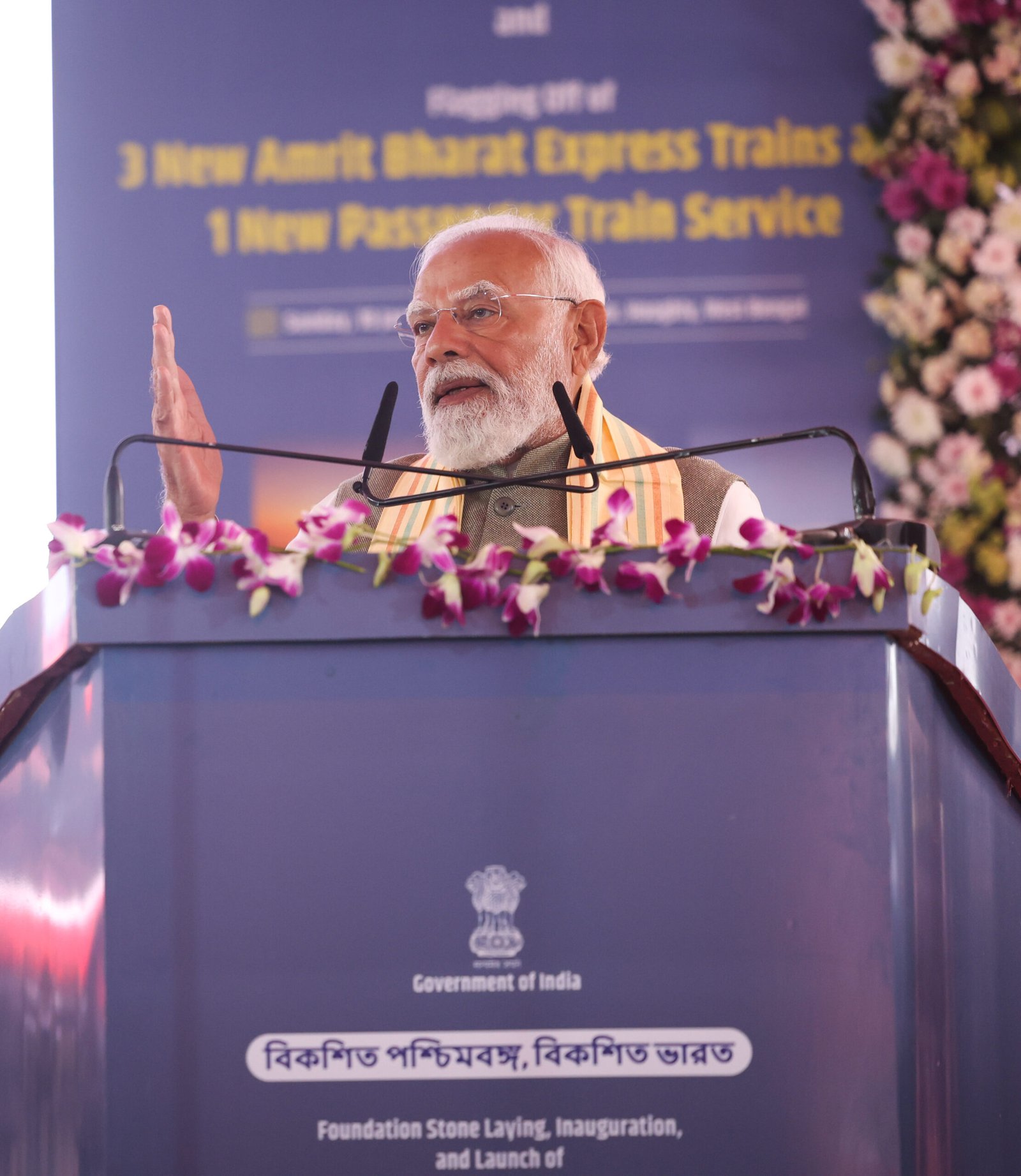
Prime Minister Narendra Modi’s two-day visit to Maldah and Singur has sparked fresh political debate and economic expectations across West Bengal. At a time when the state’s economy is often described as slow-moving or “dry”, the visit has drawn attention not just for its political messaging but also for its developmental signals, especially ahead of crucial electoral and investment cycles.
Why the Maldah and Singur Visit Matters
Maldah and Singur are not random choices. Both locations carry deep economic and political symbolism.
- Maldah represents agrarian Bengal, border trade potential, and minority-dominated districts often left behind in industrial growth.
- Singur remains a symbol of Bengal’s stalled industrialization, where the Tata Nano project exit became synonymous with missed opportunities and investor distrust.
By choosing these two locations, the Prime Minister sent a clear strategic message—development, industry, and livelihoods are back at the center of the Bengal narrative.
Key Announcements and Signals from the Visit
While no single mega industrial package was announced, the visit focused on direction-setting rather than headline-grabbing promises.
1. Renewed Push for Infrastructure-Led Growth
The Prime Minister emphasized:
- Expansion of highways, rail connectivity, and logistics hubs
- Faster implementation of central infrastructure schemes
- Integration of Bengal into eastern India’s economic corridor
For Bengal, where logistics bottlenecks increase business costs, this focus is crucial. Improved connectivity can directly benefit:
- MSMEs
- Agricultural supply chains
- Export-oriented industries
2. Focus on Agriculture, Food Processing, and Farmers’ Income
In Maldah, PM Modi highlighted:
- Food processing units
- Cold storage infrastructure
- Value addition for crops like mango, jute, maize, and fisheries
Maldah’s economy heavily depends on agriculture. Strengthening food processing can:
- Reduce post-harvest losses
- Increase farmers’ income
- Create local employment
This aligns with the Centre’s broader goal of doubling farmers’ income through value chains rather than subsidies alone.
3. Singur: A Message to Industry and Investors
Singur remains emotionally charged. By visiting the region, PM Modi:
- Reiterated the importance of industrialization for job creation
- Criticized past policies that, according to him, “drove investors away”
- Promised a pro-industry environment backed by central support
While land remains a sensitive issue in Bengal, the message was clear:
Without industry, there can be no sustainable employment for Bengal’s youth.
This messaging is likely aimed at rebuilding investor confidence, especially among:
- Manufacturing firms
- MSMEs
- Startups looking beyond metro cities
Potential Economic Impact Areas
1. Infrastructure Growth
If promised infrastructure projects move quickly, Bengal could benefit from:
- Lower transportation costs
- Increased industrial feasibility
- Better rural-urban market access
Infrastructure often acts as a foundation for private investment, especially in manufacturing and logistics.
2. MSMEs and Employment Generation
Bengal has a strong base of:
- Handloom
- Leather
- Food processing
- Small manufacturing units
Central schemes combined with better infrastructure could help MSMEs scale up, leading to local job creation, which is critical for districts like Maldah.
3. Restoring Investor Confidence
Singur’s symbolism matters beyond Bengal. A strong message on industrial stability can:
- Improve Bengal’s national investment image
- Encourage companies to reconsider the state
- Complement “Make in India” and “Viksit Bharat” goals
However, this requires policy alignment between the Centre and State government, especially on land, law and order, and ease of doing business.
Political Undertones vs Economic Reality
It would be unrealistic to ignore the political dimension of the visit. Bengal remains a key political battleground, and development messaging often overlaps with electoral strategy.
That said, economic revival does not depend on politics alone. Investors and industries look for:
- Policy stability
- Administrative support
- Infrastructure readiness
If political rivalry continues to block cooperation, the economic impact of such visits may remain limited.
What Bengal Needs Beyond the Visit
For real economic upliftment, Bengal requires:
- Centre-State coordination on projects
- Faster land and industrial clearances
- Skill development aligned with industry needs
- Stronger law and order perception
- Promotion of eastern India as a manufacturing hub
PM Modi’s visit provides the direction, but execution will decide the outcome.
Key Takeaways for Bengal
- The visit repositions development and industry at the center of Bengal’s discourse
- Maldah’s agriculture-focused push can strengthen rural incomes
- Singur visit aims to rebuild Bengal’s industrial credibility
- Infrastructure remains the biggest opportunity for economic revival
- Actual impact depends on follow-up actions and governance alignment
- India’s First Vande Bharat Sleeper Train: He flagged off the nation’s inaugural sleeper version of the Vande Bharat Express between Howrah (Kolkata) and Kamakhya (Guwahati) from Malda Town station.
- Amrit Bharat Trains: He introduced four new Amrit Bharat Express trains to improve long-distance travel for common passengers.
- Rail & Road Development: He inaugurated multiple railway and road projects, including modern train maintenance facilities in Malda designed to create local employment for youth.
- Rail Connectivity: He flagged off three new Amrit Bharat Express trains connecting West Bengal to major hubs:
- Kolkata (Howrah) – Anand Vihar Terminal (Delhi).
- Kolkata (Sealdah) – Banaras (Uttar Pradesh).
- Kolkata (Santragachi) – Tambaram (Tamil Nadu).
- Maritime Infrastructure: He laid the foundation stone for the Extended Port Gate System at Balagarh, which includes an Inland Water Transport (IWT) terminal and a road overbridge to decongest Kolkata.
- Green Urban Transport: Launched a state-of-the-art indigenous Electric Catamaran in Kolkata for urban river mobility and eco-tourism along the Hooghly River.
- New Rail Lines: Inaugurated the Jayrambati-Barogopinathpur-Maynapur rail line, providing direct connectivity for pilgrims and commuters in the Bankura district.
Conclusion: Hope, But Not a Magic Wand
Prime Minister Narendra Modi’s two-day visit to Maldah and Singur has reignited conversations around Bengal’s economic future. It offers hope, direction, and visibility—but not instant transformation. For Bengal’s “dry economy” to truly revive, policy intent must translate into projects, jobs, and investments on the ground.
If the momentum generated by this visit is sustained through cooperation and execution, it could mark the beginning of a slow but meaningful economic turnaround for West Bengal.
About The Author
Discover more from Jist Feed
Subscribe to get the latest posts sent to your email.