

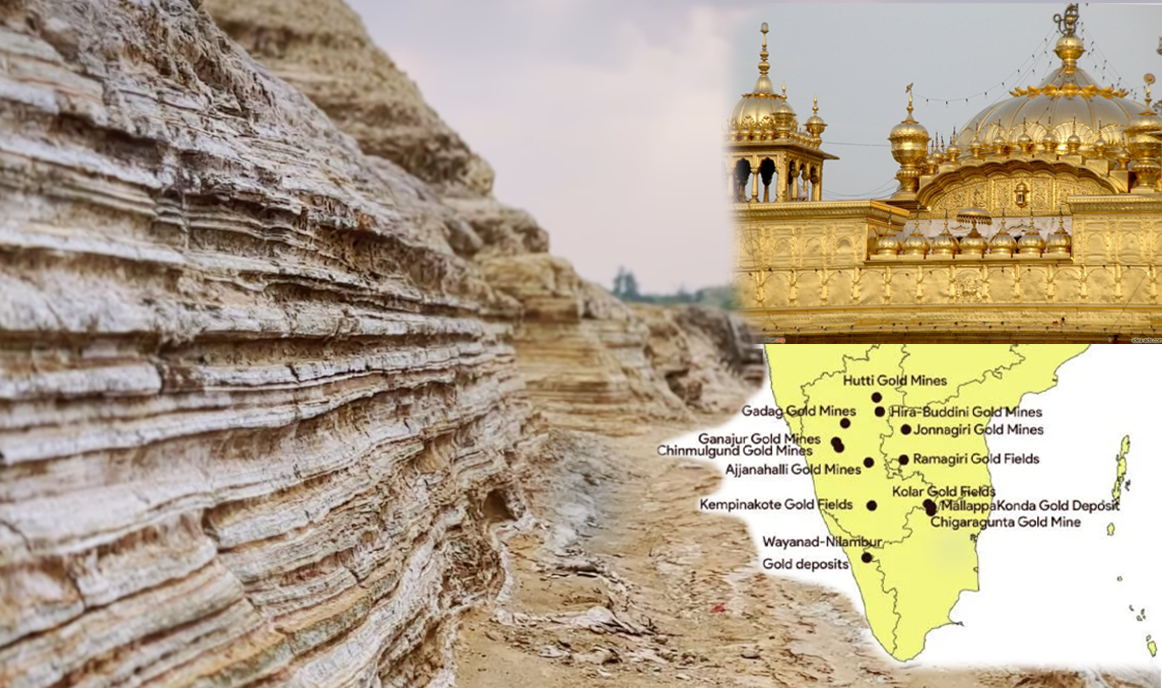
The Kolar Gold Fields (KGF) in Karnataka, once the pride of India’s mining heritage, were officially closed on February 28, 2001, after 121 years of continuous operation. For over a century, KGF symbolized India’s industrial strength, technological ambition, and its deep civilizational connection with gold.
Two decades later, the Government of India and the Government of Karnataka are preparing to reopen KGF, triggering renewed national interest. This development is not merely about reviving an old mine—it is about reconnecting India’s ancient gold legacy with modern economic and strategic priorities.
To understand why KGF is being reconsidered today, one must curious to explore:
- The historical role of gold in Sanatan Bharat
- The origins of gold mining in ancient and colonial India
- The economic reasons behind KGF’s closure
- And why gold remains India’s most trusted asset even today
A Brief History of Kolar Gold Fields (KGF)
Ancient Roots of Gold Mining in Kolar
Gold mining in the Kolar region predates British rule by over 2,000 years. Archaeological evidence and historical records suggest that gold extraction was practiced during:
- The Mauryan period
- The Satavahana dynasty
- The Chola Empire
Ancient miners used primitive shaft mining, stone tools, and natural gravity-based ore separation techniques—long before modern machinery existed.
Colonial Era: The Rise of KGF
Modern mining at KGF began in 1871, when British entrepreneur John Taylor & Sons established systematic underground mining operations.
By the early 20th century:
- KGF became one of the deepest gold mines in the world
- It supplied a major portion of British India’s gold
- It created a self-contained township with hospitals, schools, power plants, and Asia’s first electricity-powered mine
At its peak, KGF employed over 30,000 workers and was considered a global engineering marvel.
Why KGF Was Closed in 2001
Despite its glorious past, KGF faced severe challenges by the late 20th century.
1. Economic Unviability
By the 1990s:
- Cost of extracting 10 grams of gold: ~₹2,000
- Market price of 10 grams: ~₹1,200
The operation was running at a continuous loss, making it financially unsustainable.
2. Depleting Gold Reserves
- Early ore grades: ~40 grams per tonne
- By 2001: Less than 3 grams per tonne
High-grade gold veins were largely exhausted, leaving behind low-yield deposits.
3. Extreme Mining Depths
KGF reached depths of over 3,000 metres, making it:
- One of the deepest mines on Earth
- Extremely hot, with temperatures exceeding 55°C
- Highly dependent on costly cooling and ventilation systems
The combination of depth, heat, and low ore quality ultimately forced closure.
Why the Government Is Planning to Reopen KGF
1. Advanced Mining Technology
Modern technologies like:
- AI-based ore mapping
- Deep-earth geological imaging
- Automated underground mining
- Environmentally safer extraction methods
have significantly reduced operational costs compared to the 1990s.
2. Strategic Importance of Gold
Gold is no longer just a commodity—it is a strategic financial asset:
- Hedge against inflation
- Protection during global economic crises
- Reserve asset for central banks
Reopening KGF aligns with India’s goal of resource self-reliance (Atmanirbhar Bharat).
3. Untapped Deep-Level Reserves
Recent geological surveys suggest:
- Gold still exists beyond previously mined depths
- Earlier technology could not access these reserves safely or profitably
History of Gold Mining in India Beyond KGF
Major Gold Mining Regions in India
| Region | State |
|---|---|
| Kolar Gold Fields | Karnataka |
| Hutti Gold Mines | Karnataka |
| Ramgiri Gold Fields | Andhra Pradesh |
| Sonbhadra Belt | Uttar Pradesh |
| Singhbhum Belt | Jharkhand |
Among these, Hutti Gold Mines remains India’s only active large-scale gold producer today.
Gold in Sanatan Bharat: More Than Wealth
Gold as a Sacred Metal
In Sanatan culture, gold symbolizes:
- Lakshmi (prosperity)
- Purity and immortality
- Cosmic energy (Tejas)
Gold is integral to:
- Temple idols
- Yagnas and rituals
- Weddings and samskaras
- Festivals like Akshaya Tritiya and Dhanteras
Gold as Social Security
Long before modern banking:
- Gold functioned as portable wealth
- It protected families during famine, invasions, and exile
- Women traditionally held gold as Stridhan, a form of financial independence
Gold as the Safest Investment: Ancient Wisdom, Modern Reality
What modern finance now recognizes, Sanatan Bharat realized thousands of years ago.
Why Gold Endures
- No default risk
- Limited supply
- Universal acceptability
- Store of value across centuries
Today:
- India is the largest consumer of gold
- Indian households collectively hold over 25,000 tonnes of gold
- This is more than the gold reserves of any central bank in the world
India’s Household Gold vs Global Gold Reserves
| Holder | Approx. Gold (Tonnes) |
|---|---|
| Indian Households | 25,000+ |
| USA Central Bank | ~8,100 |
| Germany | ~3,300 |
| IMF | ~2,800 |
This highlights how deeply gold is woven into India’s social and cultural fabric.
Economic and Cultural Impact of KGF Reopening
Reopening KGF could:
- Generate employment in Karnataka
- Revive a historic mining township
- Reduce gold imports
- Strengthen India’s strategic reserves
- Reconnect modern India with its civilizational wealth traditions
KGF Is Not Just a Mine, It Is a Legacy
The story of Kolar Gold Fields is the story of India itself—ancient wisdom, colonial exploitation, post-independence struggle, and modern revival.
As India stands at the crossroads of tradition and technology, the reopening of KGF represents:
- Economic opportunity
- Historical correction
- Cultural continuity
Gold, once revered in Sanatan Bharat as eternal wealth, continues to shine—both as a symbol of prosperity and a pillar of national strength.
About The Author
Discover more from Jist Feed
Subscribe to get the latest posts sent to your email.