

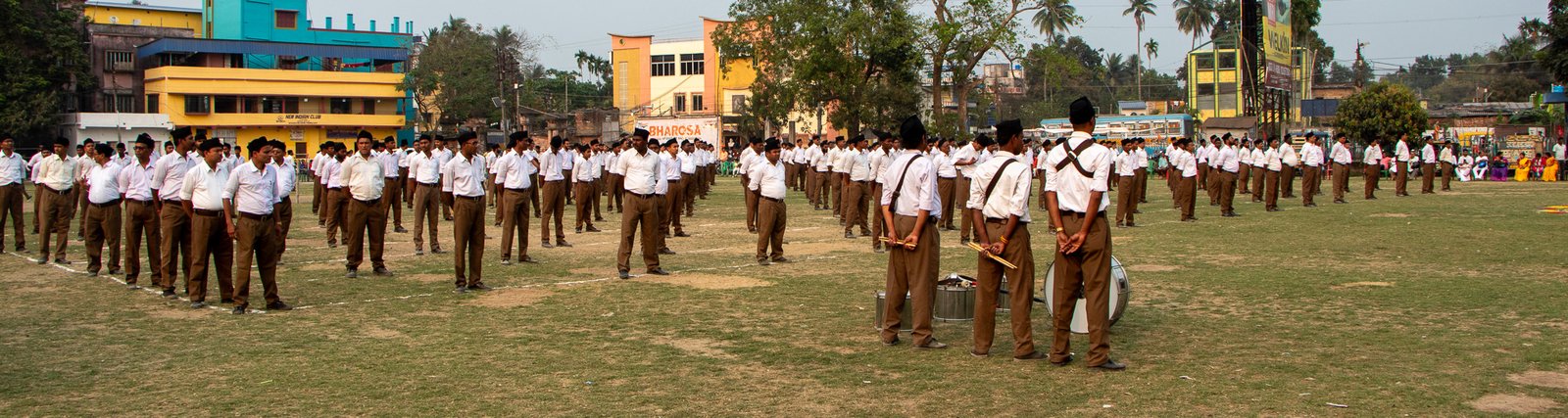
The Rashtriya Swayamsevak Sangh (RSS) has completed 100 years, marking a major milestone in India’s social and political history. Founded in 1925 in Nagpur by Dr. Keshav Baliram Hedgewar, the organization began as a small cultural group and has grown into one of the country’s largest volunteer-based movements.
From its early days, RSS focused on discipline, character building, and social unity through daily shakhas. During the 1930s and 1940s, it expanded rapidly across India, creating a strong grassroots network even before the country gained independence.
After India’s independence in 1947, RSS continued to grow but also faced challenges. It was banned in 1948 following Mahatma Gandhi’s assassination, though the ban was lifted in 1949 after investigations. The organization was banned again during the Emergency (1975–77), a period that remains a defining chapter in its history.
Over the decades, RSS developed a wide network of affiliated groups, known as the Sangh Parivar, working in education, labor, student movements, and tribal welfare. While RSS maintains that it is a cultural body, its ideological influence on Indian politics has been widely discussed, especially after the formation of the Bharatiya Janata Party (BJP) in 1980.
In the 2000s, RSS volunteers became increasingly visible in disaster relief efforts, including responses to earthquakes, floods, and tsunamis. In recent years, the organization has also expanded its outreach through digital platforms and youth engagement while retaining its traditional structure.
As RSS enters its second century in 2025, its centenary has sparked renewed attention, debate, and reflection. Supporters see it as a symbol of cultural continuity and service, while critics continue to question its ideology and influence. Regardless of perspective, RSS remains a significant presence in India’s public life, with its future role closely watched.
About The Author
Discover more from Jist Feed
Subscribe to get the latest posts sent to your email.