

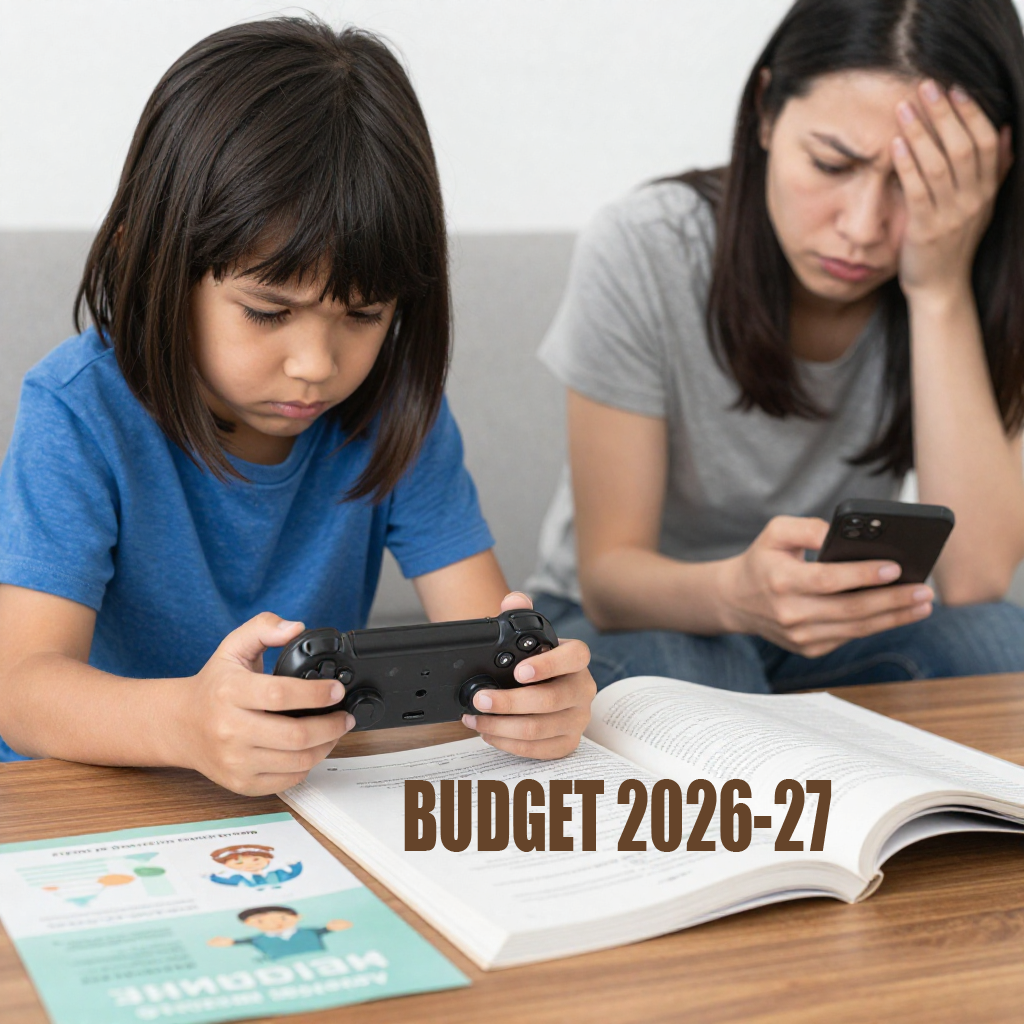
Gaming Enters India’s National Economic Strategy
For the first time in India’s fiscal history, the Union Budget 2026–27, presented on February 1, 2026, formally integrated the gaming industry into the country’s long-term economic roadmap under the newly introduced “Orange Economy” framework.
By recognizing Animation, Visual Effects, Gaming, and Comics (AVGC) as a strategic growth engine, the government has moved gaming from being seen largely as entertainment or leisure to a structured employment and export-oriented sector.
However, the announcement has also triggered an intense debate among parents, educators, health experts, and policymakers:
- Will gaming education become an Opportunity or Distraction ?
- Can parents realistically control screen exposure?
- Will the government introduce strict regulations to protect children?
This article offers complete coverage, grounded in the Budget 2026–27 speech, industry projections, and global policy trends.
What the Union Budget 2026–27 Says About Gaming
Gaming Under the “Orange Economy”
The budget speech clearly places gaming within a broader creative-industries ecosystem, alongside animation, VFX, and comics — sectors associated with high-skill jobs, IP ownership, and exports.
The government’s focus is not on gaming consumption but on gaming creation.
Key Gaming & AVGC Announcements
1. AVGC Content Creator Labs in Schools and Colleges
- 15,000 secondary schools
- 500 colleges
- Anchored by the Indian Institute of Creative Technologies (IICT), Mumbai
- Focus on coding, 3D modeling, game engines, storytelling, animation, and design
2. ₹250 Crore Allocation for Talent Development
- Dedicated funding for AVGC skilling in FY 2026–27
- Aimed at building a domestic talent pipeline, not outsourcing
3. Massive Job Creation Target
- 2 million AVGC professionals needed by 2030
- Covers roles like:
- Game developers
- Technical artists
- Animators
- Level designers
- UI/UX specialists
4. Single-Window Digital Clearances
- Faster approvals for:
- Creative institutes
- Large entertainment and gaming projects
- Improves ease of doing business for Indian studios
Why the Government Believes This Is Good for Students
1. From Playing Games to Building Games
The budget reframes gaming as vocational education, similar to how IT education was positioned in the 1990s.
Students are expected to learn:
- Programming logic
- Mathematics in physics engines
- Visual storytelling
- Design thinking
The intent: Create engineers and artists — not gamers.
2. A Career Path Beyond Rote Learning
India’s traditional education system does not work for every student. AVGC labs offer:
- Skill-based learning
- Portfolio-driven assessment
- Global employability
For students who struggle with rote memorization, this could open doors to high-paying, future-ready jobs.
3. Early Digital Literacy = Global Advantage
Proponents compare this push to:
- India’s early IT-skilling advantage
- Coding becoming a “new language” under NEP 2020
The argument:
If children are already spending time on screens, teach them productive digital skills.
Why Parents Are Worried: Real Risks for Children
Despite the optimism, parental anxiety is not unfounded.
1. Screen Time Overload
India already faces:
- Excessive mobile usage
- Online gaming addiction concerns
Adding school-based screen labs could:
- Increase sedentary behavior
- Cause eye strain and sleep issues
- Reduce attention spans
2. Neglect of Foundational Subjects
Parents fear that:
- The “glamour” of gaming careers
- May dilute focus on Maths, Science, and Languages
Ironically, these subjects are essential for game development itself.
3. The Influencer & Viral Fame Trap
The term “Content Creator Labs” has raised alarms:
- Children may chase YouTube fame
- Rather than mastering hard technical skills
Without discipline, the line between education and entertainment can blur quickly.
Global Context: Why This Debate Matters Now
Countries like:
- China (strict gaming hour limits)
- EU nations (digital wellness laws)
- Scandinavia (reduced classroom screen exposure)
…are tightening regulations, not expanding screen-based learning.
India, therefore, is taking a contrarian but calculated risk.
How Budget 2026–27 Tries to Prevent Negative Impact
1. Structured, NEP-Aligned Curriculum
According to the budget framework:
- Labs are tied to NEP 2020
- Focus on:
- Coding
- Design thinking
- Problem-solving
- Not recreational gameplay
2. Technical Focus via IICT
The Indian Institute of Creative Technologies (IICT) emphasizes:
- Animation pipelines
- VFX production
- Game engine development
- IP creation
Not esports or casual gaming.
3. Cultural & Educational Content Creation
One stated goal:
- Digitizing Indian heritage
- Creating culturally rooted IPs
- Using games as educational tools, not distractions
What the Budget Did NOT Address
1. No GST Relief on Gaming
- No change in 28% GST on skill-based gaming
- Industry wanted a reduction to 18%
2. No Hardware Incentives
- No subsidies for:
- Gaming PCs
- Consoles
- Development hardware
- This could limit grassroots access
Will It Become a Challenge for Parents?
Yes — absolutely.
Parents will now need to:
- Actively monitor digital hygiene
- Distinguish between learning and leisure
- Ensure balance between:
- Physical activity
- Academic fundamentals
- Creative skills
Passive parenting will not work in this model.
Will It Negatively Affect Children?
It can — if poorly implemented.
| Scenario | Outcome |
|---|---|
| Hobby-based, unstructured | Addiction & distraction |
| Skill-based, disciplined | Career-ready talent |
The impact depends on execution, not intent.
Will the Government Impose Strict Regulations?
Very likely in the future.
Possible upcoming measures:
- Screen time caps in schools
- Mandatory breaks & physical activity
- Child-specific digital wellness guidelines
- Clear separation between education tools and gaming apps
India is expanding first — regulation will follow.
Opportunity or Risk?
The Union Budget 2026–27 gaming push is neither blindly good nor inherently dangerous.
It is:
- A strategic bet on India’s creative economy
- A test of responsible implementation
- A shared responsibility between government, schools, and parents
If executed with discipline, India could transition from a service hub to a global gaming IP powerhouse.
If mishandled, it risks deepening screen addiction among children.
The Orange Economy can create creators — or consumers.
The difference will be decided at home and in classrooms, not in budget documents.
About The Author
Discover more from Jist Feed
Subscribe to get the latest posts sent to your email.