

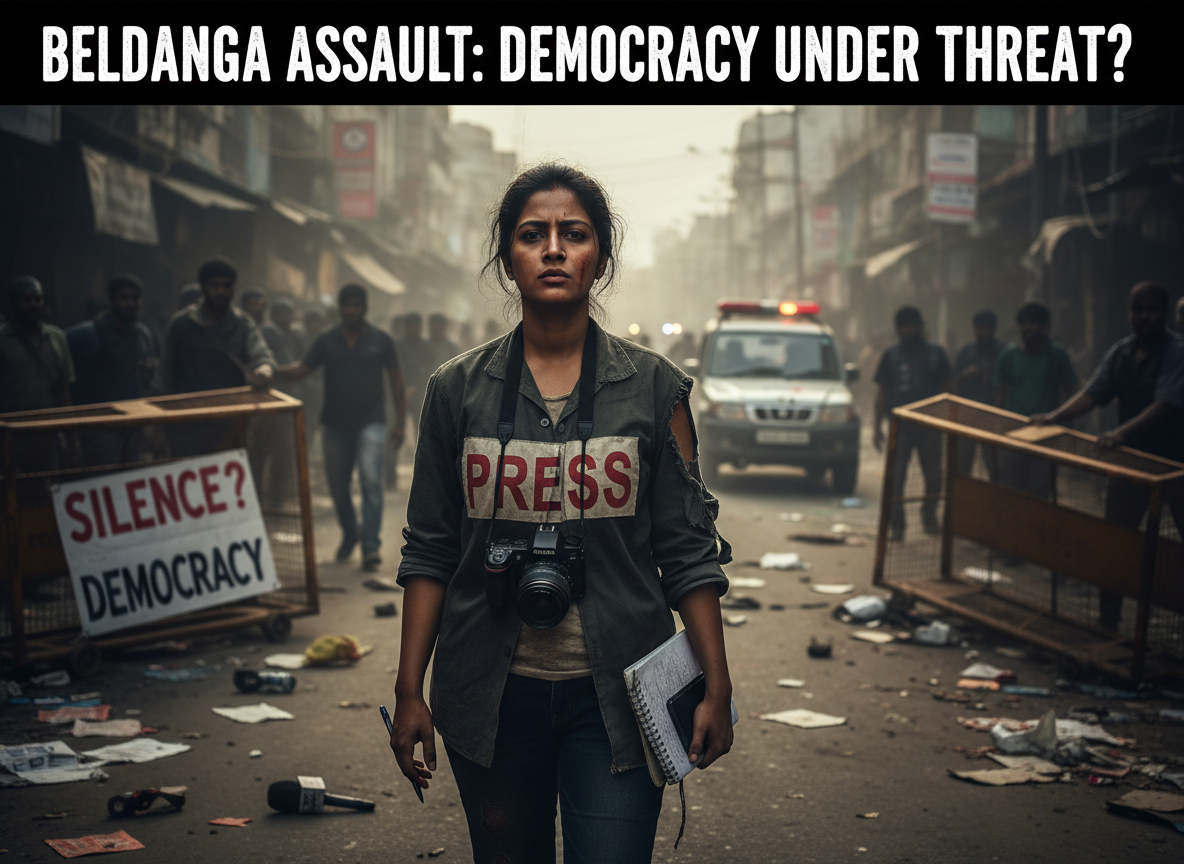
A Disturbing Incident in West Bengal
A woman journalist was reportedly beaten by TMC the regional ruling party supporter in Beldanga, West Bengal. The incident occurred on Friday and sparked immediate public outrage. However, silence from key institutions has deepened concerns nationwide. Moreover, journalists fear shrinking democratic space across the country.
What Happened in Beldanga: Facts and Allegations
Local sources reported an attack on a woman journalist during professional duty on Friday, 16th January. The alleged assailant reportedly belonged to a religious group and had political affiliations of the ruling party in the state of West Bengal.. Meanwhile, videos and eyewitness accounts circulated on social platforms. Therefore, public pressure mounted for swift accountability.
Lack of Immediate Action by Press Bodies
Since the incident occurred , no strong response emerged from major press clubs. Similarly, journalist associations issued no decisive statements. Consequently, many questioned institutional commitment to press freedom. Furthermore, delayed reactions risk normalizing violence against reporters.
Safety of Journalists at Home and in the Field
Journalists expect protection both professionally and personally. However, reports suggest no visible support reached her residence. Additionally, safety assurances remain unclear to the public. Thus, fear spreads among reporters working in sensitive regions.
Democratic Rights Under Pressure
A free press sustains democratic accountability. Therefore, attacks on journalists undermine constitutional values. Moreover, intimidation discourages investigative reporting. Consequently, citizens lose access to unbiased information.
International Media Silence and Global Perception
The incident has not gained wide international coverage yet. Meanwhile, global watchdogs closely observe press freedom rankings. Hence, silence may signal deeper issues of visibility. Additionally, repeated incidents risk tarnishing India’s democratic image.
Is India’s Global Democratic Image at Stake?
India prides itself as the world’s largest democracy. However, frequent journalist assaults raise serious credibility questions. Moreover, global investors and allies track civil liberty trends. Thus, unchecked violence may affect diplomatic perceptions.
Role of Political Accountability
Political parties must condemn violence unequivocally. Instead, partisan silence often fuels public mistrust. Furthermore, accountability strengthens democratic legitimacy. Therefore, leaders must act beyond rhetoric.
Social Media Reactions and Public Voice
Citizens expressed anger across digital platforms. Likewise, hashtags demanded justice and protection. Nevertheless, online outrage alone cannot ensure change. Hence, institutional action remains essential.
Legal Framework and Enforcement Gaps
India has laws protecting journalists. However, enforcement often appears inconsistent. Moreover, delays weaken deterrence. Consequently, perpetrators may feel emboldened.
Press Freedom and Regional Challenges
Regional journalists face higher risks than national counterparts. Additionally, political proximity intensifies local pressures. Therefore, decentralized protections need strengthening. Similarly, media houses must support field reporters better.
Why This Incident Matters Nationally
One attack reflects broader systemic vulnerabilities. Furthermore, it signals tolerance for intimidation. Thus, ignoring this case sets dangerous precedents. Moreover, justice here could restore public confidence.
Call for Immediate and Transparent Action
Authorities must ensure impartial investigation immediately. Meanwhile, press bodies should mobilize legal support. Additionally, safety protocols require urgent review. Finally, solidarity across media platforms must strengthen.
Defending Democracy Through Press Freedom
A journalist’s safety equals democracy’s health. Therefore, society must reject violence unequivocally. Moreover, institutions must act decisively and transparently. Ultimately, protecting journalists protects India’s democratic soul.
About The Author
Discover more from Jist Feed
Subscribe to get the latest posts sent to your email.